
Did I Over Do It?


So what’s your over-do? You know - that interest or passion of yours that keeps showing up in your Amazon orders or on your social media feed. The one that when you take a step back and honestly assess all of the paraphernalia you have for it, you can’t help but think, “I may have over done this.”
(Or more likely, your partner is saying, “You’ve over done this.”😆)
Maybe it’s drawers full of make-up or hair products? Perhaps you’re a techie with the latest gadgets alongside a graveyard of outdated junk. Possibly it’s kitchen tools, cookbooks, and exotic ingredients.
All of it is in search of that perfect….what? Look, convenience, recipe?
Well, it’d be unfair for me to go any further without revealing mine. It’s bio-hacks. I have a counter full of supplements, several pieces of technology and apparatus, stacks of articles, a long playlist of podcasts, and a horde of ‘save for later’ videos. All in the search for ‘perfect health’. I’m forever wanting to squelch an ache, ramp up my energy, sharpen my mind, optimize my digestion, or whatever it is in that moment that I think is insufficient - but all in a natural way, of course😉.
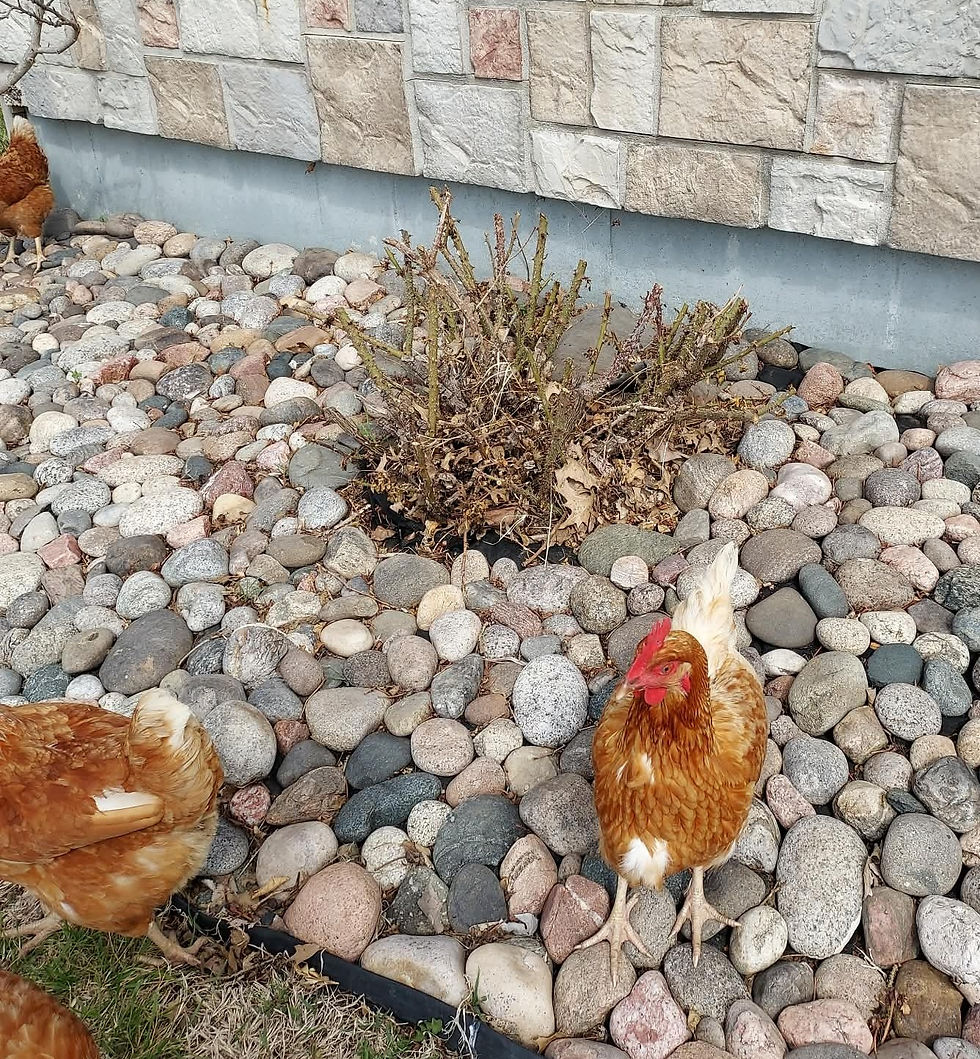
BUT! This goes directly against #2 of the four tenets listed in the last post on how to grow and improve right alongside radical self-acceptance. As a review, here they are in reference to the rosebush metaphor:
1. It never has an expectation to be anything other than a rosebush.
2. It doesn’t force its health and vibrancy into being. It takes what is offered to it in effortless stride and allows its beauty to naturally evolve.
3. When it’s not tended to, it doesn’t shame itself for becoming overgrown, thorny, and lackluster. It’s confident in knowing that it retains full capacity to return to a balanced, dynamic thing of beauty when it’s properly cared for.
4. It’s not attached to what no longer serves. As a leaf browns, or a bloom withers, it either naturally releases, or it welcomes the pruning - understanding that it is best served when it can let go. Even if it’s letting go of something that appears healthy.
So, I’ve spent a good many years trying to force my health into what I thought it should be. Long ago I adopted the ‘input-output’ mindset. It plays out something like this: If I take supplement W, I will see improvement X. If I adopt habit Y, I will enjoy improved Z. If I cut out that food, I can expect better this, that, or the other. For years I cultivated my overall health in this way because, guess what…it worked! I enjoyed great health with lots of energy, little pain or injury, and I felt vibrant!
Until I didn’t.
You’ve already heard me lament over my woes of menopause. I won’t rehash it all, but it really did knock me down. As soon as I identified what was happening, I kicked my bio-hack research into high gear looking for natural remedies for disrupted sleep, overnight weight gain, widespread pain, restless legs, blah, blah, blah.
Supplements showed up, new styles of exercise were tried, rest was prioritized, foods were cut out. I even tried some hormone creams!
And voilà! …. Nothing changed. I don’t know what was worse - the debilitating symptoms or the realization that my input-output strategy was not working. I wasn’t able to control this and manipulate that into better health. The more I forced, the worse I felt. The more I demanded good health, the more I languished.
My students will tell you that one of the mantras at my yoga studio is, “The body never lies.” It always tells you the truth, so listen to it!
Ahh, yet another concept I thought I was living by, only to have it revealed that I was, again, just dancing around the edges of it.
Turns out my version of ‘listening to my body’ was really more like ‘searching for and naming all my deficiencies’. After months of trying to force wellness into being, I had to surrender and admit, “I don’t know how to fix this!”. I learned from Glenda Green’s book Love Without End that the solution to a ‘problem’ does not exist on the same plane where the problem originated. We must look at it from a higher plane, a broader perspective in order to find resolution.
So I zoomed way out and with reluctance saw that these symptoms were actually a gift. Yes, they were a wise teacher guiding me to finally approach the concept of radical self-acceptance. To acknowledge that my inherent worth remains intact even if I’m not the superactive, resilient health-nut that many relied on.
Fatigue, chronic pain, and disconnection from self forced me into the “I Don’t Care Club’ where in order to survive, I had to take my focus off of regaining an identity that I had become compulsively attached to. Rather, I had to put my focus on caring for myself without milestones to hit and expectations for outcomes. And to put my focus on valuing myself for who I am and what I have to offer in this very moment. (It takes what is offered to it in effortless stride and allows its beauty to naturally evolve.)
Like all growth, it was uncomfortable. It still is. I’m still trying to untangle the threads named self-acceptance, self-care, self-worth, purpose, hope, and being. But I’m extending grace to myself, allowing for true rest, and practicing much patience with the process.
Now this doesn’t mean that I’ve given up the quest to feel better. Our bodies are physical structures, and all structures need maintenance, care, and attention. I intend to give myself that attention - minus the forcing, minus the manipulation, minus the focus on deficiency. I’m open to letting my natural beauty evolve.
Take a moment. Reflect on your over-do. Is it fulfilling and nourishing you? Or is it keeping you in that never-ending chase for the perfect…….
Check out my services here on the site.
Reiki, Wellness Coaching, Yoga - they’re all great places to start extending grace to yourself.


Comments